In California, nursing homes generally must document incidents, notify physicians and responsible parties, and, in certain circumstances, report to state authorities.
While the exact reporting requirement depends on the severity of the fall and the type of facility, the key point is this: a serious fall is not something a nursing home can quietly “handle internally.”
In many cases, a fall triggers one or more of the following obligations:
- Internal incident reporting and charting (care notes, incident reports, witness statements)
- Medical notification (notifying the attending physician and/or arranging emergency care)
- Family or responsible party notification (often required promptly)
- Regulatory reporting when the fall results in serious injury, death, or suspected abuse/neglect
If the facility won’t provide clear documentation, gives conflicting stories, delays notifying you, or claims there is “no incident report,” that can be a red flag.
In California, nursing homes generally must document incidents, notify physicians and responsible parties, and, in certain circumstances, report incidents to state authorities. While reporting requirements depend on the circumstances, a serious fall should never be overlooked. If you suspect nursing home neglect, Perlmutter & Pourshalimi can help you understand your legal options.
How Common are Falls in California Nursing Homes?
Falls are one of the most common and most dangerous incidents in nursing homes. For families, a “simple fall” can quickly turn into a broken hip, a head injury, a sudden decline, or even a wrongful death. For facilities, falls can signal understaffing, poor supervision, unsafe rooms, or ignored care plans.
If your loved one fell in a California nursing home, you may be wondering:
Are nursing homes required to report falls? In many situations, yes. And when a facility fails to report, document, or respond appropriately, it can be evidence of nursing home neglect.
This guide explains when California nursing homes must report falls, the types of falls and injuries we see most often, and what to do if you suspect the facility is hiding what happened.
Why fall reporting in nursing homes matters
A fall is not just an “accident.” In a nursing home setting, falls often happen because staff didn’t manage a resident’s known risks, such as medication side effects, poor lighting, missing grab bars, wet floors, or a lack of assistance during transfers.
Proper reporting helps ensure:
- The resident gets immediate medical evaluation and treatment
- The family is informed quickly
- The facility investigates the cause and prevents repeat falls
- Regulators can identify patterns of unsafe care
When a nursing home downplays or fails to report a fall, residents can be put at risk of repeat injuries, and families lose the chance to make informed decisions.
Types of falls in nursing homes
Not all falls look the same. Understanding the type of fall can help identify what went wrong and whether the facility failed to follow basic safety practices.
1) Slip and fall accidents in nursing homes
These often involve:
- Wet floors from spills or cleaning
- Bathrooms without non-slip mats
- Poor footwear or missing socks/shoes
- Waxed floors or uneven surfaces
Slip and fall accidents in nursing homes are frequently preventable with routine maintenance and supervision.
2) Trip and fall hazards in nursing homes
Common trip hazards include:
- Clutter in walkways
- Loose cords or rugs
- Broken flooring transitions
- Poor lighting, especially at night
3) Bed falls in nursing homes
Residents may fall:
- Rolling out of bed
- Trying to get up without assistance
- Due to improperly adjusted bed height
Bed falls can be linked to inadequate monitoring, missing safety measures, or failure to follow a care plan.
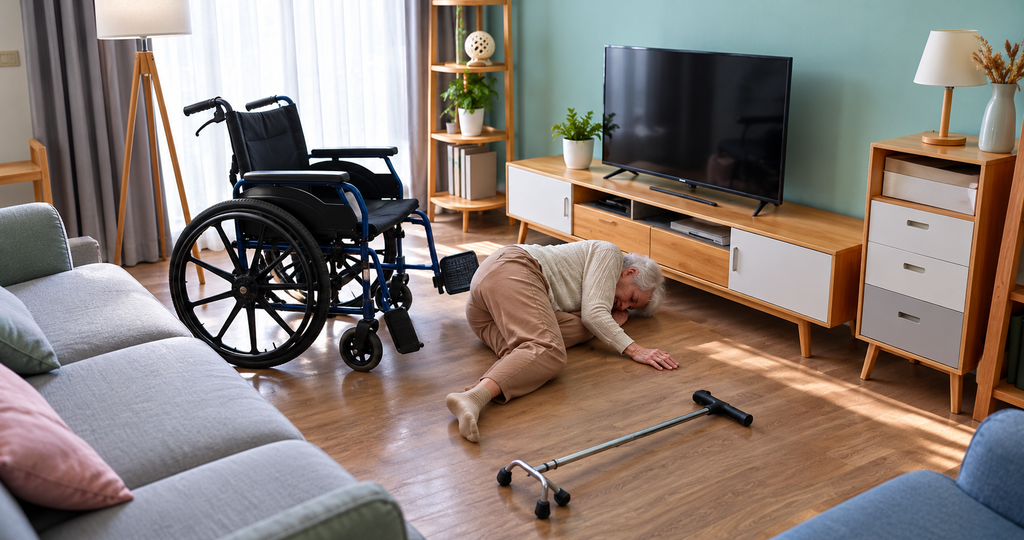
4) Wheelchair or transfer falls in nursing homes
These occur during:
- Transfers from bed to wheelchair
- Transfers to the toilet or shower chair
- Standing or pivoting without enough staff assistance
Transfer falls are a major concern because they often point to understaffing or improper training.
5) Bathroom falls in nursing homes
Bathrooms are high-risk areas due to:
- Wet surfaces
- Tight spaces
- Lack of grab bars
- Residents rushing due to incontinence
6) Unwitnessed falls in nursing homes
An unwitnessed fall can be especially dangerous because:
- The resident may have hit their head
- Symptoms of brain injury may be delayed
- The facility may not know how long the resident was down
Unwitnessed falls can also raise questions about whether the resident was properly supervised.
What are the Most Common Types of injuries from nursing home falls?
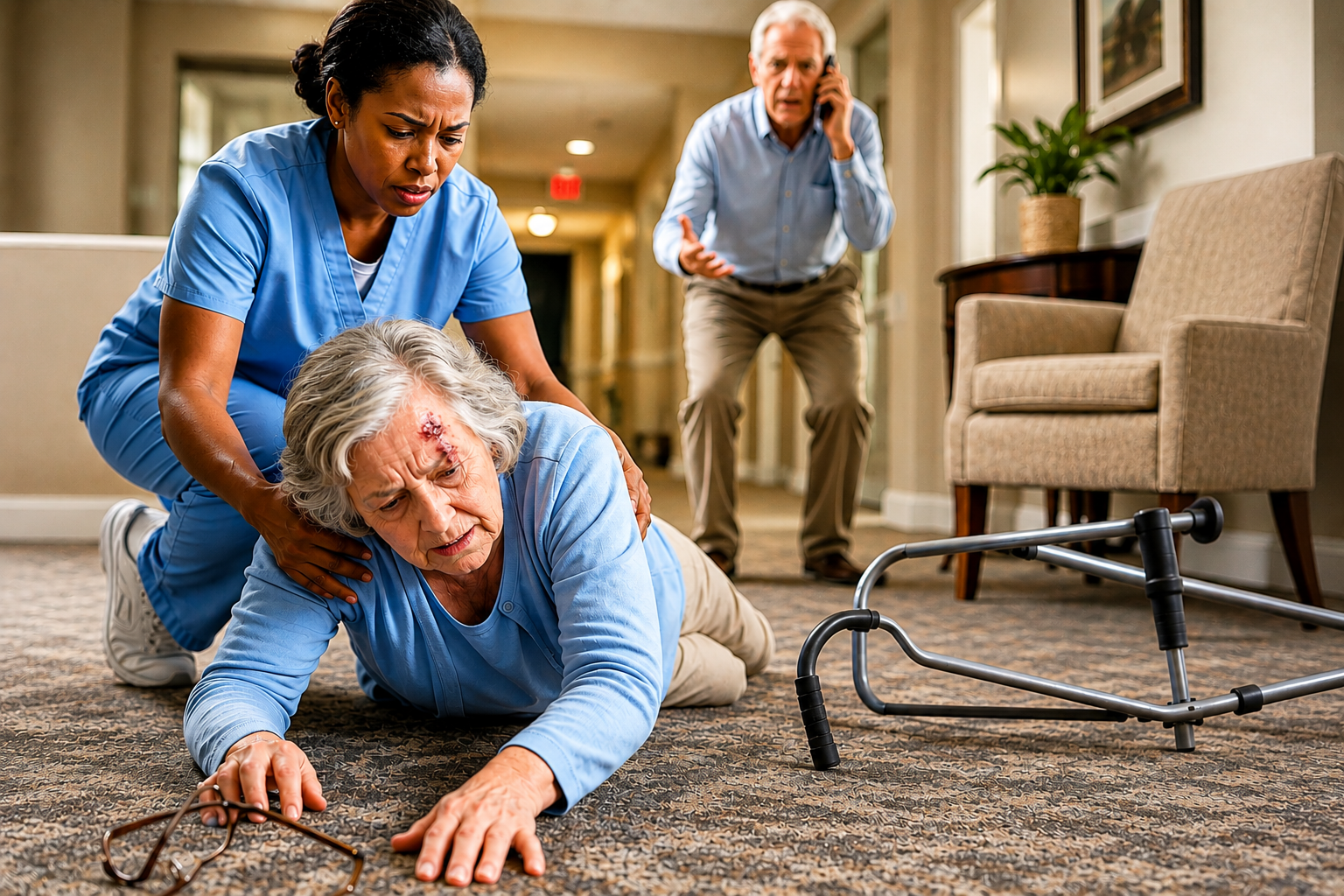
Falls in older adults can cause devastating injuries, especially for residents with osteoporosis, balance disorders, dementia, or medication-related dizziness.
Common injuries include:
- Hip fractures (often requiring surgery and long rehabilitation)
- Wrist, arm, and shoulder fractures (common when residents try to catch themselves)
- Head injuries and traumatic brain injuries (TBI)
- Subdural hematomas (bleeding in the brain that may not show symptoms immediately)
- Facial fractures and dental injuries
- Spinal injuries (including compression fractures)
- Lacerations and deep bruising
- Pressure injuries if a resident is left on the floor too long
- Loss of mobility and rapid decline after hospitalization
Even when a fall seems “minor,” older adults can deteriorate quickly due to pain, fear of walking, infection risks, or complications from surgery.
Fall statistics: how common are nursing home falls?
Falls are widely recognized as a leading cause of injury among older adults, and nursing home residents are particularly vulnerable.
Commonly cited research and public health sources report that:
- A significant percentage of nursing home residents fall each year
- Many residents experience multiple falls
- Falls are a leading cause of fractures and head injuries in long-term care
If you’re seeing repeated falls, frequent bruising, or vague explanations, it may indicate the facility is not addressing the underlying risk factors.
When a fall may signal nursing home neglect
A fall can happen even in a well-run facility. But certain facts can suggest nursing home neglect or unsafe conditions.
Red flags include:
- Delayed medical care after the fall
- Staff minimizing the incident (“She’s fine”) despite obvious pain
- Unexplained bruises or injuries with no clear timeline
- Missing or incomplete documentation
- The facility fails to notify family promptly
- Repeated falls without a meaningful care plan update
- Signs of understaffing (call lights ignored, residents left unattended)
- Poor housekeeping (wet floors, clutter, broken equipment)
If you suspect that a nursing home failed to protect your loved one from preventable harm, learning about California elder abuse attorneys can help you better understand the legal options available to your family.
What to do if your loved one fell in a California nursing home
If you’re worried about a fall being covered up or you’re not getting straight answers, take these steps as soon as possible:
- Get medical evaluation immediately. Ask for hospital transport if there is any possibility of head injury, fracture, or severe pain.
- Request documentation in writing. Ask for the incident report, nursing notes, and updated care plan.
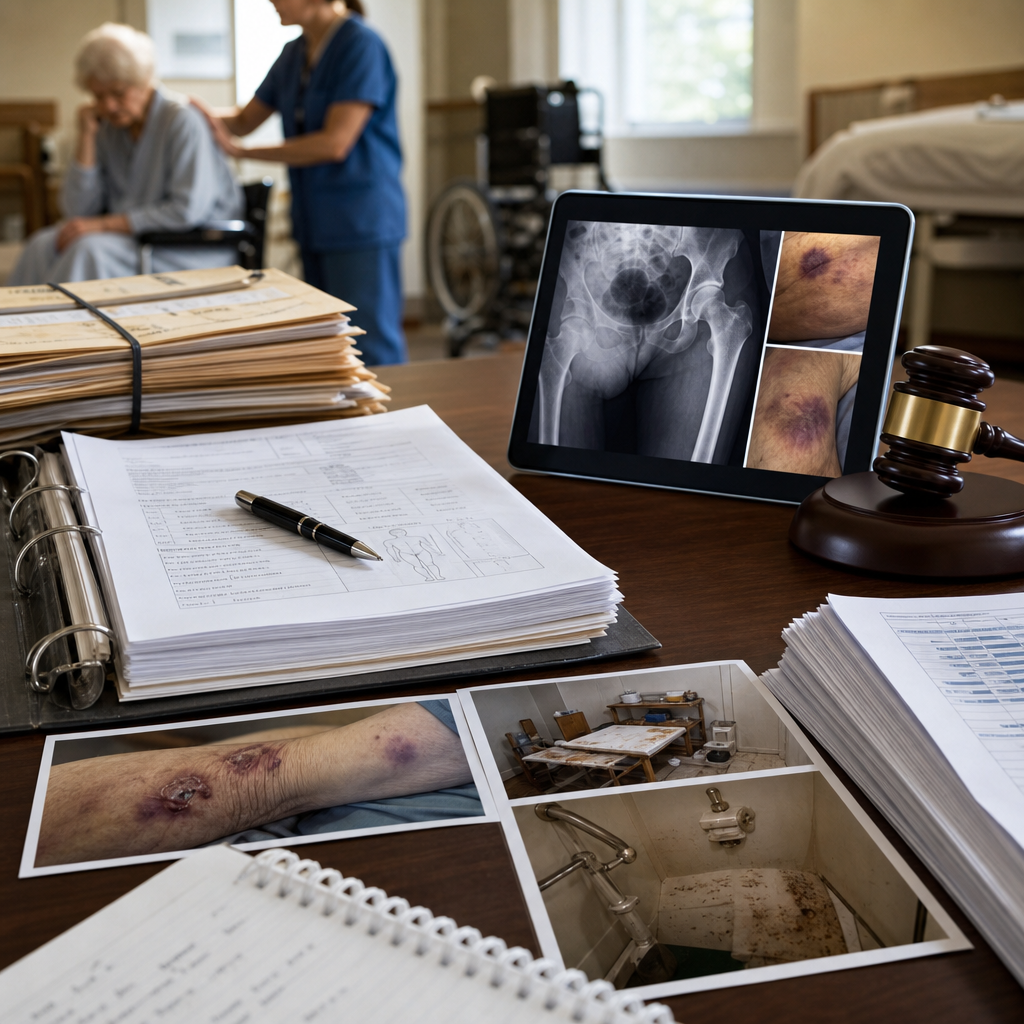
- Take photos. Document bruising, swelling, cuts, and the area where the fall occurred (if you can).
- Ask specific questions. Was the fall witnessed? Who found the resident? How long were they down? What was the resident doing right before the fall?
- Track changes after the fall. Confusion, sleepiness, headaches, or personality changes can be signs of brain injury.
- Consult nursing home injury lawyers. A legal review can help determine whether the fall was preventable and whether the facility followed reporting and care standards.
How a nursing home fall case may be investigated
Experienced nursing home lawyers often look for evidence such as:
- Fall risk assessments and care plans
- Staffing levels and assignment sheets
- Training records
- Medication logs (sedatives, blood thinners, blood pressure meds)
- Prior fall history and interventions
- Surveillance footage (if available)
- Maintenance and housekeeping records
In many cases, the question is not only “Did they report the fall?” but also: Did they prevent it, respond properly, and protect the resident afterward?
Building a potential claim requires clear documentation of what happened and how the facility responded. Learn more about the evidence needed to prove nursing home neglect claims, including medical records, incident reports, photographs, witness statements, and care plan violations.
Talk to Perlmutter & Pourshalimi about a nursing home fall
If your loved one suffered a fall in a California nursing home and you suspect neglect, you don’t have to handle this alone. Perlmutter & Pourshalimi, also known as P and P Firm, helps families investigate what happened, identify whether the facility violated safety and reporting duties, and pursue accountability.
If you’re looking for a slip and fall lawyer, nursing home injury lawyer, or California nursing home neglect lawyer, contact Perlmutter & Pourshalimi to discuss your situation. The sooner you act, the easier it may be to preserve records, documentation, and other key evidence.
Call Perlmutter & Pourshalimi at 310-295-2236 for a free consultation.
Why families choose Perlmutter & Pourshalimi
When a nursing home fall happens, families want answers fast and a team that cuts through excuses and gets to the truth. Perlmutter & Pourshalimi is focused on elder abuse and nursing home neglect cases, and the firm’s approach is simple:
- Respect the resident. Your loved one’s dignity comes first.
- Follow the evidence. Records, staffing, care plans, and timelines matter.
- Push for accountability. Facilities should not be allowed to hide preventable harm.
If you suspect your loved one’s fall was preventable or the facility is not being transparent, call 310-295-2236 to speak with Perlmutter & Pourshalimi.
Frequently Asked Questions
Are California nursing homes required to report falls?
Nursing homes generally must document falls, provide appropriate medical care, and notify relevant individuals. Certain incidents must also be reported to state authorities, depending on the circumstances and applicable requirements.
When can a nursing home fall be a sign of neglect?
A fall may raise concerns about nursing home neglect if it involves inadequate supervision, unsafe flooring, ignored fall risks, insufficient assistance, or repeated incidents without appropriate preventive measures.
What injuries can result from nursing home falls?
Nursing home falls can cause hip fractures, head injuries, broken arms or wrists, spinal injuries, bruising, and reduced mobility. Some injuries may require hospitalization and extended rehabilitation.
What should I do if my loved one falls in a California nursing home?
Seek prompt medical evaluation, request the incident report and relevant care records, document visible injuries, and ask the facility how the fall occurred. If you suspect neglect, consider consulting a nursing home injury lawyer.
Can I pursue a claim if nursing home neglect contributed to a fall?
You may have legal options if a nursing home’s failure to meet its responsibilities contributed to your loved one’s injuries. The circumstances, available evidence, and applicable California law will determine whether a claim may be pursued.