Table of Contents
When Preventable Bedsores Signal Neglect
When your loved one develops bedsores in a nursing home, it’s not simply an unfortunate side effect of aging or immobility. Bedsores, also called pressure ulcers, are highly preventable injuries that signal a breakdown in basic care standards.
At Perlmutter & Pourshalimi, we’ve helped families hold California care facilities accountable for this preventable harm. If you’re watching your parent or relative suffer from bedsores, understanding your legal rights is the first step toward justice and compensation.
Bedsores develop when a resident’s skin remains under prolonged pressure without relief. In a functioning care facility, this simply shouldn’t happen. Staff should be repositioning immobile residents every two hours, ensuring proper nutrition and hydration, keeping skin clean and dry, and monitoring high-risk individuals closely.
When bedsores appear, especially severe ones, it means the nursing home failed at these fundamental duties. A Stage 3 or Stage 4 ulcer (where tissue damage extends to muscle and bone) arriving within months of admission is often a clear sign of systematic neglect.
We’ve seen cases where residents developed multiple deep pressure ulcers within weeks of entering a facility.
The reality: preventable bedsores cause significant pain, infection risk, extended hospitalization, and in some cases, death from sepsis. If your loved one has developed bedsores while in professional care, that’s not acceptable, and you have grounds to pursue a negligence claim.
Action step: Document the bedsores with photos, note when they first appeared, and gather medical records from both the facility and any hospital treatment your loved one received.
Understanding Bedsore Development and Nursing Home Duty of Care
Bedsores develop through a combination of pressure, friction, and moisture. The human body’s skin breaks down when weight compresses blood vessels for extended periods, cutting off oxygen to tissue. Immobile residents and those with reduced sensation are highest risk, but that’s precisely why they need active prevention.
Nursing homes have a legal duty to assess each resident’s pressure ulcer risk during intake and throughout their stay. Once identified as high-risk, residents require documented prevention protocols: scheduled repositioning, appropriate bedding and cushions, skin inspections, proper hygiene, and adequate nutrition.
This isn’t optional or discretionary; it’s a care standard every facility must follow.
Many facilities cut corners by understaffing, skipping turning schedules to save labor costs, or ignoring existing wound care protocols.
We’ve reviewed countless medical records where facility charts show documented neglect, with gaps in turning logs or missing skin assessments that should have triggered intervention.
The medical evidence is compelling: research shows that proper turning every two hours prevents 95 percent of pressure ulcer development. When bedsores appear, medical expert review can often confirm that standard protocols weren’t followed.
Families dealing with suspected neglect may also benefit from reviewing our article on Top 6 Evidence Types to Prove Nursing Home Neglect Claims.
Why Bedsores Indicate Systemic Negligence in Care Facilities
A single bedsore might be explained as an unfortunate complication, but our investigation typically reveals deeper failures. Bedsores rarely appear in isolation; they indicate broader staffing, training, or supervision problems.
When we investigate these cases, we commonly find:
- Inadequate staffing levels that make hourly turning impossible
- Untrained or poorly trained staff unfamiliar with pressure ulcer prevention
- Missing or falsified turning logs that show repositioning that never occurred
- Failure to use pressure-relief equipment like specialized mattresses or cushions
- Ignored physician orders for wound care or nutritional support
- No systematic skin monitoring or early detection of warning signs
One family we represented discovered that their mother’s facility had documented turning schedules, but actual bedside inspections revealed she’d been in the same position for days. The gap between written protocol and actual care is where negligence lives.
These patterns suggest systemic failures in how the facility operates, not just isolated mistakes. When you see bedsores, you’re often seeing evidence of a facility that prioritized cost-cutting over resident safety across multiple care areas. Families can also learn about other preventable nursing home injuries in our guide to heat-related injuries in nursing homes.
California Laws Protecting Nursing Home Residents from Neglect
California holds nursing homes to strict accountability standards. The state recognizes that residents are vulnerable populations deserving heightened protection.
Under California law, nursing homes must provide adequate care and supervision. Facilities must comply with regulations set by the California Department of Public Health’s Licensing and Certification program.
These regulations explicitly require pressure ulcer prevention protocols. When facilities breach these requirements and residents are harmed, they’re liable for damages.
California also allows recovery for both economic damages (medical bills, future care costs) and non-economic damages (pain, suffering, emotional distress). In cases where negligence is particularly egregious, courts may award punitive damages intended to punish the facility and deter similar conduct.
Additionally, California recognizes claims for elder abuse. If a facility’s conduct is reckless or oppressive, it may constitute abuse under California Welfare and Institutions Code Section 15610.07. This opens additional legal pathways and potential remedies.
Families who want to understand how elder abuse claims may differ from ordinary negligence cases can also read our guide to California elder abuse attorneys.
We also examine whether the facility violated mandatory reporting laws, failed to report injuries appropriately, or concealed the extent of neglect from residents’ families and physicians.
How We Investigate Bedsore Negligence Cases
Our investigation begins with a thorough medical records review. We obtain all documentation from the nursing home: admission notes, care plans, physician orders, turning logs, wound assessments, and incident reports. We look for gaps, contradictions, and evidence of care that diverges from what was documented.
We retain medical professionals, including wound care specialists and nursing experts, to review your loved one’s care against industry standards. These experts can identify whether the facility’s actions fell short of what a reasonably competent facility would have done. They also help establish causation: did the facility’s negligence directly cause the bedsore and its progression?
We investigate the facility’s staffing patterns and training records. Understaffing is often the root cause; if a facility simply didn’t have enough staff to perform required turning schedules, that’s negligence. We examine staff turnover, how many certified nursing assistants were on duty, and whether staff received training on pressure ulcer prevention.
We also gather the facility’s incident reports, complaints to state regulators, and inspection findings. Many facilities have histories of neglect; prior complaints or cited deficiencies strengthen your case.
Finally, we interview your loved one (if able), family members, and any staff members willing to discuss what actually happened. Sometimes facility employees have witnessed neglect and will cooperate with an investigation.
Building Your Case: Evidence We Gather and Analyze
A strong nursing home negligence case rests on clear evidence showing breach of duty and resulting harm. We build this through multiple evidence sources.
Medical records form the foundation. We create timelines showing:
- When the bedsore first appeared
- The stage and severity of the ulcer
- Whether the facility documented its presence immediately or delayed recognition
- What treatment was provided and when
- How the ulcer progressed over time
We analyze facility care documentation meticulously. Turning logs showing consistent repositioning every two hours support the facility’s defense; irregular or gapped logs support negligence. We compare what was documented against what medical notes and expert review suggest actually occurred.
Expert witness testimony is critical. A physician or wound care nurse can explain to a jury why the bedsore developed, what protocols should have been followed, and whether the facility breached those protocols. Their opinion carries significant weight in establishing liability.
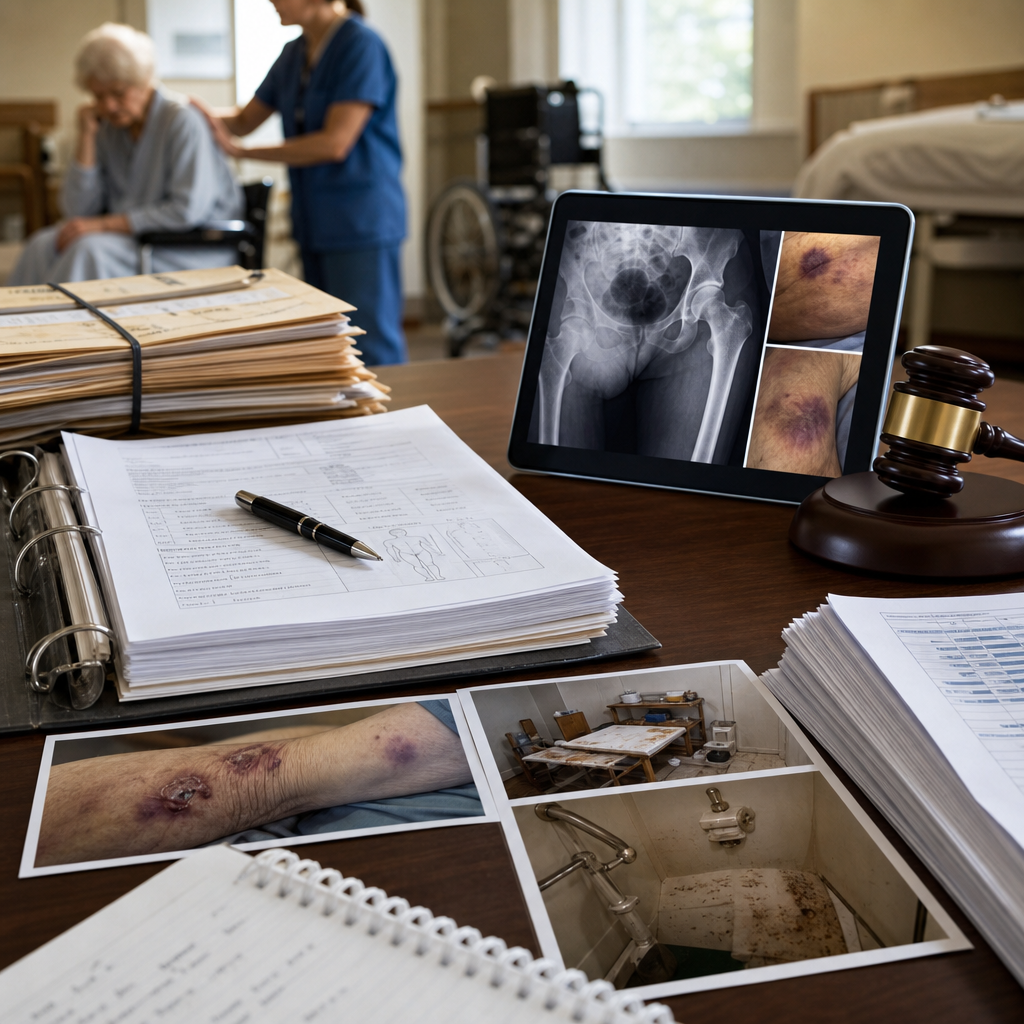
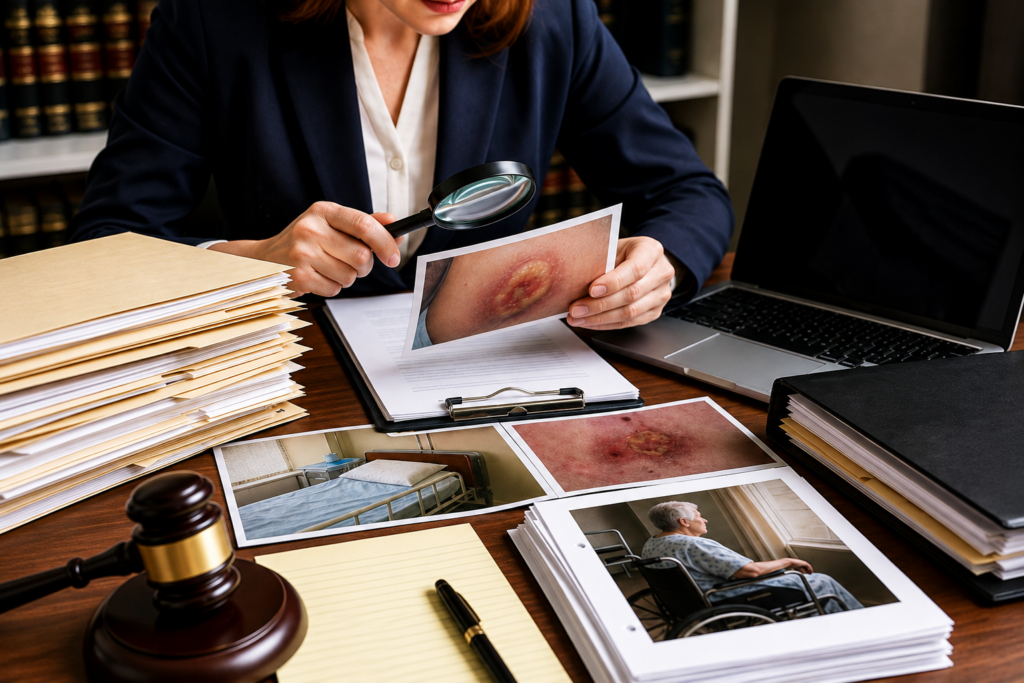
Photographs of the bedsore, if available, provide visual evidence of severity. Medical imaging (X-rays, CT scans) showing bone involvement demonstrates how deep the tissue damage became.
We also gather regulatory history. State inspection reports documenting prior violations related to pressure ulcer prevention or general neglect establish that the facility had notice of risks and failed to correct them.
The Damages You May Recover in a Bedsore Negligence Claim
When a nursing home negligently causes bedsores, you’re entitled to recover damages reflecting the harm your loved one suffered.
Economic damages include all medical costs: hospitalization, wound care, antibiotics, surgical intervention if debridement was needed, and ongoing treatment. If your loved one requires extended care due to infection or complications, those future medical expenses are recoverable.
You can also recover costs for additional care or equipment needed at home or in another facility.
Non-economic damages compensate for pain and suffering. Bedsores are painful, especially in advanced stages. They cause emotional distress, anxiety, and loss of dignity. Your loved one’s quality of life is diminished. California allows you to recover damages for this suffering.
If negligence was particularly egregious, punitive damages may be available. These aren’t meant to compensate for harm; they’re meant to punish the facility and discourage similar conduct. Punitive damages send a message that this level of neglect won’t be tolerated.
In cases where bedsores contribute to your loved one’s death, families can pursue wrongful death damages. These include economic losses (medical expenses, lost inheritance) and non-economic losses (loss of companionship, emotional anguish).
Settlements and verdicts in nursing home bedsore cases vary widely based on severity, age, and liability strength, but they often exceed six figures when evidence is clear.
Why Acting Quickly Matters in Bedsore Negligence Cases
Time is critical in nursing home negligence cases, and delay erodes your position in several ways.
California’s statute of limitations generally gives you one year from discovery of negligence to file a lawsuit. While that sounds like time, cases require thorough investigation and expert review before filing. Starting early ensures you have adequate time to build your strongest case.
Evidence degrades with time. Staff members leave the facility, making witness testimony harder to obtain. Records may be lost or “inadvertently” destroyed. Facility conditions change, making site inspections less useful months later. Early investigation preserves evidence while it’s fresh and readily available.
Medical records can become harder to obtain if your loved one passes away or if facilities become uncooperative. Acting quickly, while your loved one is still receiving care or shortly after, makes information access easier.
Additionally, prompt action demonstrates your seriousness to the facility and insurance companies. Delays can suggest weaker cases, potentially weakening settlement negotiations.
Action step: Contact an experienced law firm as soon as you notice or suspect bedsore negligence. Initial consultations cost nothing, and early involvement improves your chances of maximum recovery.
How Our Contingency Fee Model Works for Your Family
At Perlmutter & Pourshalimi, elder abuse lawyers, we understand that families facing nursing home negligence don’t want to add legal costs to their burden.
That’s why we operate on a contingency fee basis: we only get paid if you win your case or reach a settlement.
Here’s how it works. You pay no upfront legal fees, no hourly charges, and no costs out-of-pocket. We cover investigation expenses, expert witness fees, filing costs, and all other case expenses. These costs are recouped from your settlement or judgment if we win.
Our fee is a percentage of your recovery, typically 33% of settlements or verdicts, though this varies based on case complexity and whether the case goes to trial. This aligns our interests with yours: we’re motivated to recover the maximum possible amount because we share in the result.
This model means families can pursue justice without financial risk. You’re not choosing between affording legal help and moving forward with your claim. We take cases based on merit, not on whether you can pay upfront.
Taking Your First Steps: Free Consultation and Case Evaluation
If your loved one has suffered bedsore negligence in a California nursing home, we’re here to help. We offer free consultations by phone or in person, with no obligation. You can call us at 310-295-2236 any time. Our office is open Mon – Fri 8:30 am – 5:30 pm PST, and we are available 24/7 if you need us after normal business hours.
During your free consultation, we’ll listen to what happened, answer your questions, and give you an honest assessment of your case. We’ll explain California law, discuss potential damages, outline our investigation process, and answer any concerns about cost or timeline.
You can schedule your consultation today by calling 310-295-2236 or visiting our nursing home neglect page. Many families prefer phone consultations for convenience, and we’re happy to accommodate that preference.
Bedsores in nursing homes are preventable, and facilities that allow them to develop are negligent. You have the right to hold them accountable, and we have the experience to help you succeed.
Contact us today for a free case evaluation, and let’s discuss how we can pursue justice for your loved one.
For further reading, see our article on Bedsores and Malnutrition: When Neglect Becomes Abuse.
Call Perlmutter & Pourshalimi for a Free Consultation at 310-295-2236. Our trusted nursing home injury lawyers are here to answer your questions, and fight to seek justice for you and your family.
Frequently Asked Questions
What evidence do we look for when investigating a nursing home bedsore case?
We examine medical records, nursing documentation, and care plans to establish whether your loved one received proper wound care, repositioning, and hygiene protocols. We also obtain expert opinions from medical professionals to demonstrate how the facility’s failure to follow standard care practices directly caused or worsened the bedsore, and we review staffing levels and training records to show systemic neglect.
How much does it cost to hire us to handle my bedsore negligence claim?
We work on a contingency fee basis, which means we only collect payment if we win your case or secure a settlement. You pay nothing upfront, and we cover all investigation and litigation costs ourselves, so your family bears no financial risk while we pursue the compensation you deserve.
Why is timing important in filing a bedsore negligence lawsuit in California?
California law imposes strict deadlines for filing negligence claims, and evidence can be lost or memories fade as time passes. We encourage families to contact us immediately so we can preserve critical medical records, secure witness statements, and build the strongest possible case before these details become unavailable.
Can a nursing home be held responsible if a resident develops a bedsore?
A nursing home may be held responsible when its failure to provide appropriate care, supervision, monitoring, repositioning, nutrition, hygiene, or wound treatment causes or contributes to a resident’s pressure ulcer. Whether a facility is legally responsible depends on the specific facts, medical evidence, and applicable California law.
What should I do if I suspect my loved one’s bedsore was caused by nursing home neglect?
If you suspect nursing home neglect caused or worsened a bedsore, document the injury when possible, keep copies of medical records and treatment information, note when the injury was first discovered, and communicate your concerns to the appropriate parties. You should also consider speaking with an experienced nursing home injury lawyer promptly so potential evidence and legal deadlines can be evaluated.