Table of Contents
When Your Loved One Falls in an Assisted Living Facility
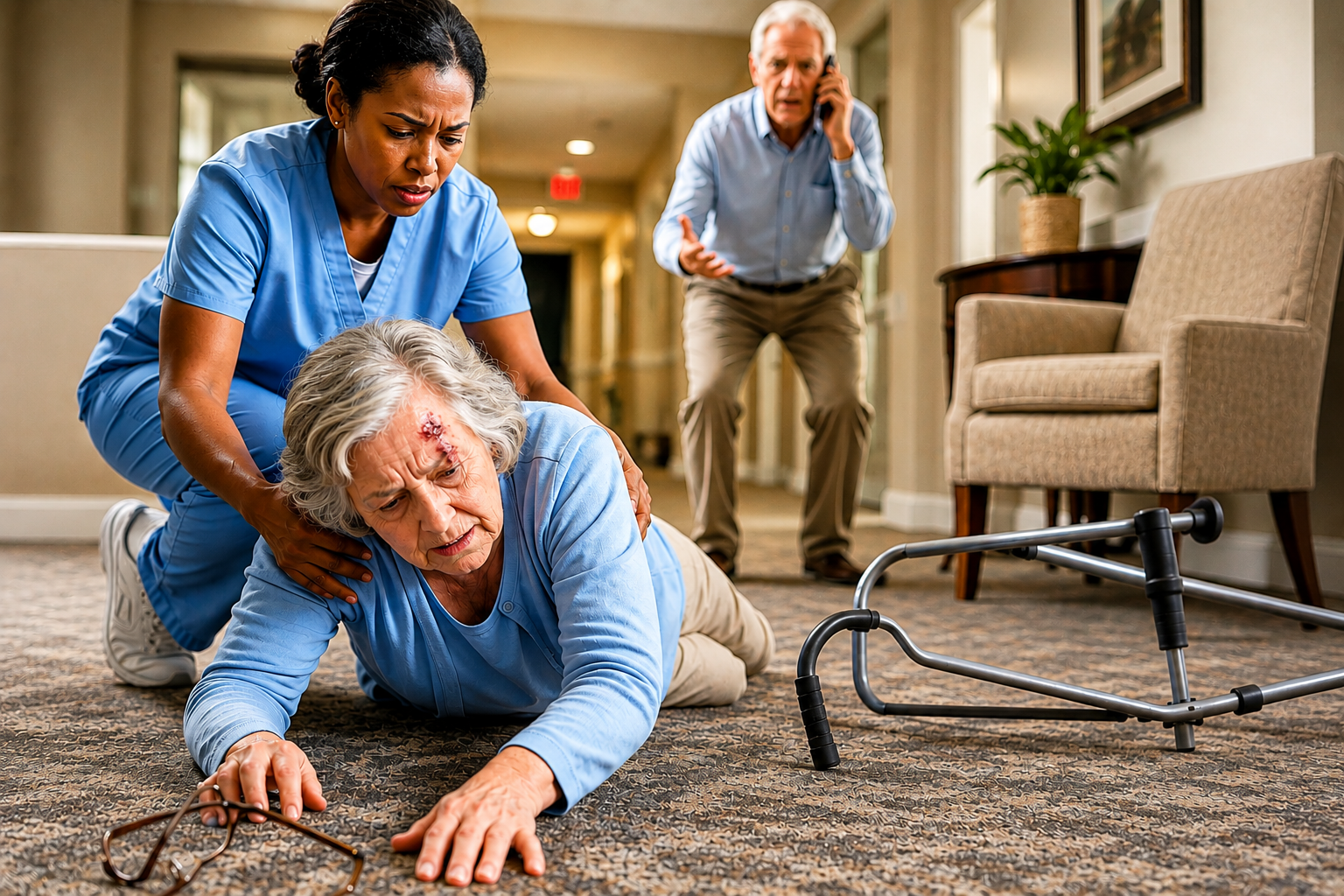
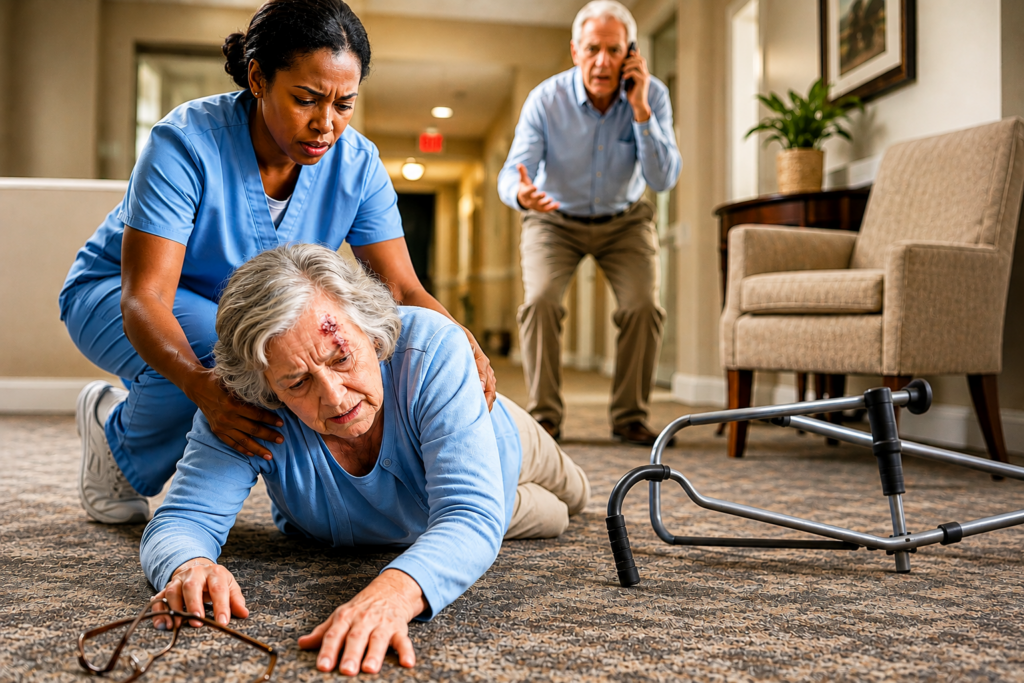
A phone call comes. Your parent fell at the assisted living facility. They hit their head. Now they’re at the hospital, confused and injured, and you’re left with questions no family should have to ask: How did this happen? Who was supposed to be watching them? Will they recover? Can we hold the facility accountable?
Falls are traumatic for everyone involved. What makes them worse is discovering that they may have been preventable. We know because we’ve helped families in this exact situation.
When a loved one suffers a fall injury or traumatic brain injury (TBI) in a California care facility, you need more than sympathy. You need an aggressive advocate who understands both the medical realities of aging bodies and the legal obligations facilities must meet.
We’re here to help you understand what happened, who’s responsible, and what your family can do next.
Why Falls and TBI Injuries Are Common in California Care Facilities
Falls among the elderly happen more often than they should in assisted living and nursing homes, and there are specific reasons why.
Many facilities operate with inadequate staffing levels. When one caregiver is responsible for too many residents, supervision gaps emerge. A resident attempting to walk to the bathroom without assistance, a person with known fall risk left unmonitored, a wheelchair not properly locked during a transfer.
These situations happen repeatedly because facilities prioritize cost savings over resident safety.
Environmental hazards multiply the risk. Poorly maintained hallways, inadequate lighting, missing handrails, wet floors without warnings, and cluttered pathways create dangerous conditions. Residents with cognitive decline, vision problems, or mobility issues are especially vulnerable in these spaces.
Medical factors compound the problem. Many elderly residents take multiple medications that affect balance and alertness. Conditions like Parkinson’s disease, arthritis, and inner ear disorders increase fall risk naturally.
When facilities fail to account for these vulnerabilities through proper monitoring or environmental modifications, negligence becomes the result.
Understanding nursing home fall injuries and their consequences is your first step toward holding facilities accountable.
Understanding Liability in Assisted Living Injuries
Liability in assisted living injuries rests on a clear legal principle: facilities have a duty of care toward residents. This duty includes maintaining safe environments, providing adequate supervision, and responding appropriately to known risks.
When a facility breaches this duty and someone gets hurt as a result, they’re legally responsible. This applies whether the injury was caused by:
- Failure to prevent falls through proper supervision or environmental safety
- Inadequate staffing that prevented timely response or monitoring
- Failure to use assistive devices like bed rails or non-slip mats when needed
- Negligent handling during transfers or mobility assistance
- Failure to implement a care plan that accounts for known fall risk
California law also recognizes that facilities are liable for the negligent acts of their employees. If a caregiver failed to assist a resident properly and caused a fall, the facility bears responsibility.
Your family doesn’t need to prove intent or malice. Negligence is enough. Proving the facility failed to meet the standard of care expected in the industry is the foundation of your claim.
How We Investigate Fall and TBI Claims
Our investigation process begins immediately after we take your case. We gather facts before memories fade and evidence disappears.
We obtain the resident’s complete medical records and the facility’s incident reports, care plans, and staffing logs. We identify what the facility knew about your loved one’s fall risk and what precautions they were supposed to take.
We review video surveillance if available, interview staff and other residents who witnessed the event, and consult with medical experts who can explain the injury’s cause and severity.
We also investigate the facility’s history. Did this location have previous fall incidents? Were there prior complaints about staffing or safety? We look for patterns of negligence that suggest systemic problems rather than isolated accidents.
During this process, we communicate regularly with you and your family. You provide context about your loved one’s condition and the facility’s care quality. Your observations are valuable investigative tools.
Proving Negligence in Your Facility Injury Case
Proving negligence requires establishing four elements: the facility owed a duty of care, they breached that duty, the breach caused the injury, and your loved one suffered damages.
The duty of care is straightforward in facility cases. California law requires assisted living facilities and nursing homes to provide adequate supervision and maintain safe premises. Documentation of this duty exists in state regulations, the facility’s own policies, and industry standards.
The breach is where the evidence becomes concrete. If staffing levels fell below what’s required, that’s a breach. If the facility knew a resident had high fall risk but didn’t implement safeguards, that’s a breach. If environmental hazards existed and weren’t corrected, that’s a breach.
Causation connects the breach to the injury. We work with medical experts to establish that the fall would not have occurred but for the facility’s negligence. This is often straightforward in fall cases: proper supervision or a safe environment would have prevented the incident.
Damages are the measurable harm your family suffered. Medical bills, lost wages if you had to leave work for caregiving, pain and suffering, permanent disability, and wrongful death are all recoverable. For more information about nursing home injuries, neglect, and the legal options available to families, explore our blog for additional resources and guidance.
Documenting Medical Evidence for Maximum Compensation
Medical evidence is the foundation of your compensation claim. We help you gather and organize it systematically.
Start with baseline health records showing your loved one’s condition before the fall. This establishes what they could do and how they were functioning. Then collect all medical records from the injury and recovery.
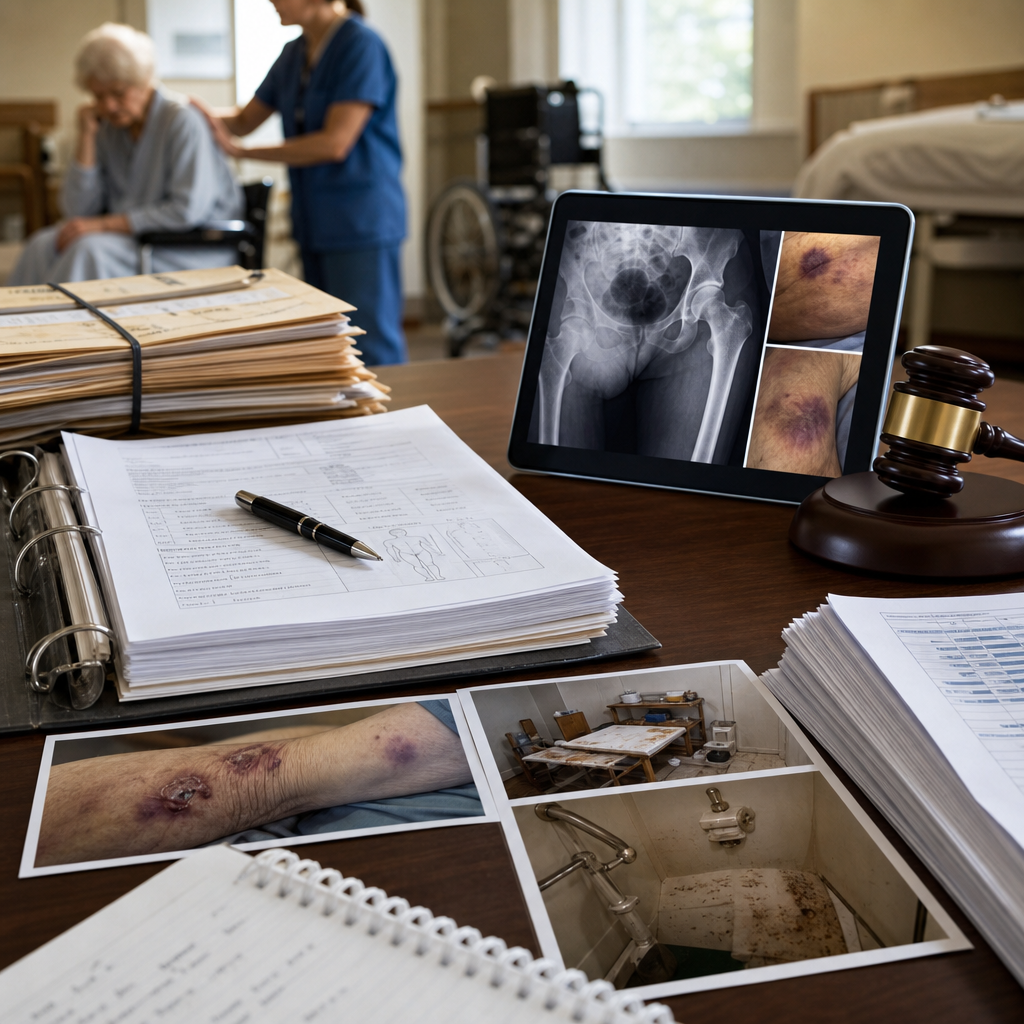
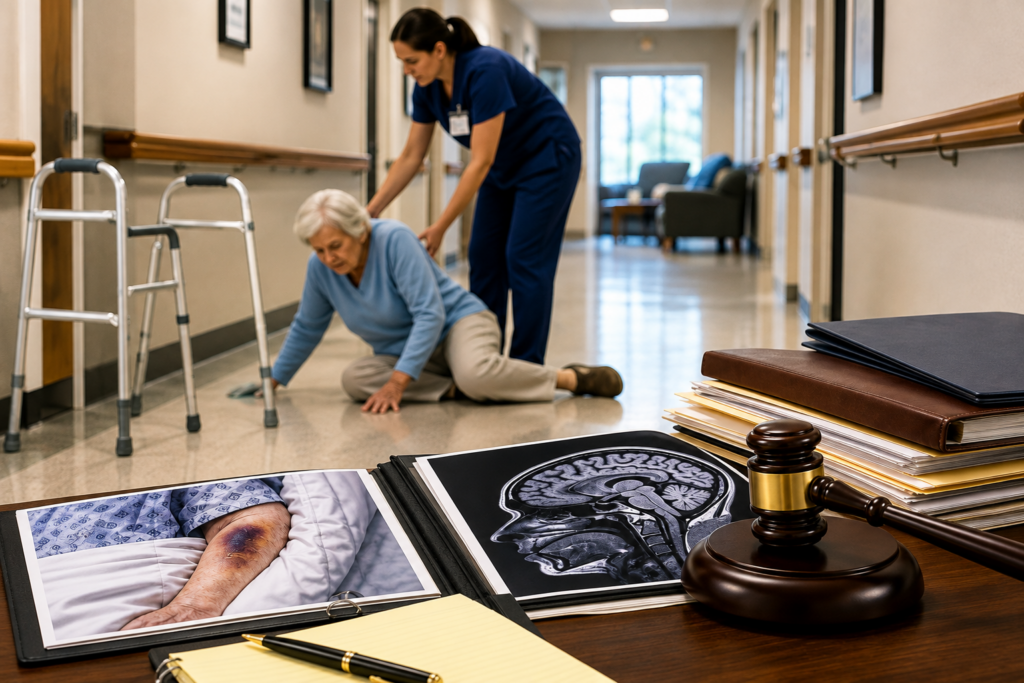
Hospital reports, imaging studies (X-rays, CT scans, MRIs), rehabilitation records, and ongoing treatment documentation tell the story of your loved one’s suffering and costs.
For TBI cases specifically, neuropsychological evaluations are crucial. These tests measure cognitive function, memory, attention, and personality changes caused by the brain injury.
Expert testimony from neurologists, physiatrists, or neuropsychologists can explain the injury’s long-term impact on your loved one’s quality of life.
Document the ripple effects too. If your loved one requires ongoing therapy, medication adjustments, or permanent care changes, these costs matter. If they’ve lost independence, that’s compensable.
We work with medical experts to quantify not just the immediate injury but the lifetime impact.
Types of Damages You Can Recover
Compensation in facility injury cases includes both economic and non-economic damages.
Economic damages are calculable expenses: past and future medical treatment, rehabilitation, in-home care assistance, medications, medical equipment, and any lost income if your loved one was still working. We calculate these carefully with the help of economic experts who project lifetime costs.
Non-economic damages account for pain, suffering, emotional distress, loss of enjoyment of life, and reduced quality of life. If your loved one has permanent cognitive changes from TBI, cannot perform activities they once enjoyed, or requires constant supervision, these losses are compensable.
In cases involving wrongful death, surviving family members can recover for loss of companionship, support, and guidance. The economic value of the deceased’s support, and the emotional loss they caused, both matter. For more information, explore our guide on filing a nursing home death claim and how it can help families seek answers and accountability.
Punitive damages are available in cases where the facility’s conduct was particularly reckless or egregious, though these are pursued in limited circumstances.
Why a Contingency Fee Model Works for Your Family
We represent injury and abuse victims on contingency. You pay no fees unless we win your case. This means we absorb all investigation costs, expert witness fees, and legal expenses upfront.
This model aligns our interests with yours. We’re committed because our compensation depends on successful recovery. We won’t waste time on weak claims or settle for less than your case deserves. You don’t face difficult choices between hiring an attorney and covering medical bills.
When you work with us, you’re not paying hourly fees that accumulate during the investigation or negotiation process. You’re partnering with a firm that invests resources into your case and only takes payment when results are delivered.
Common Barriers Facilities Use to Avoid Accountability
Facilities fighting liability claims often employ predictable strategies. Understanding these tactics helps you recognize them when they emerge.
They blame the victim: “Your loved one fell because of their medical condition, not our care.” While medical conditions may contribute to falls, proper supervision and environmental safety reduce risk significantly. We demonstrate that facilities can and should accommodate residents with these conditions.
They claim insufficient evidence. Facilities sometimes destroy or fail to preserve video footage, documentation of incidents, or staffing records. California law protects your right to pursue claims even when evidence has been lost or withheld, and we know how to address these gaps.
They offer quick settlements that undervalue long-term impacts. A facility might propose a settlement that covers immediate medical costs but ignores permanent disability, ongoing therapy, or wrongful death’s emotional devastation. We ensure settlements reflect the true scope of harm.
They question medical causation. Expert witnesses for the facility may argue the injury resulted from pre-existing conditions rather than negligence. Our medical experts counter with clear evidence of causation.
How We Hold Facilities Accountable
We hold facilities accountable through aggressive legal representation. This means we’re not interested in minimizing claims or accepting inadequate settlements. We build cases that make facilities take responsibility seriously.
We file lawsuits when facilities won’t negotiate fairly. We use the discovery process to obtain internal communications, incident reports, prior complaints, staffing records, and training documentation that reveal patterns of negligence. We depose facility administrators, care managers, and direct-care staff to establish what they knew and what they failed to do.
We retain expert witnesses who testify about the standard of care, how the facility breached it, medical causation, and long-term injury impact. We present evidence clearly and compellingly, whether during settlement negotiations or trial.
We also ensure facilities understand the reputational and financial consequences of negligence. Holding one facility accountable sends a message to others about the importance of proper staffing, maintenance, and resident protection.
Your Next Steps: Getting a Free Consultation
If your loved one suffered a fall or TBI in a California assisted living facility or nursing home, your next step is simple: contact us for a free consultation. There’s no obligation, no pressure, and no cost.
During our initial conversation, we’ll listen to what happened. We’ll ask questions about your loved one’s condition, the facility’s response, and the care they received. We’ll explain your legal rights and what a claim might look like in your specific situation.
Call Perlmutter & Pourshalimi, nursing home lawyers at 310-295-2236. We offer free phone appointments because we understand that family members are often managing medical crises and can’t easily travel. We’re available to discuss your case when it works for you.
Provide any documents you have: incident reports from the facility, medical records, correspondence with the facility, or photos of the environment. But don’t worry if you don’t have everything organized yet. We’ll help you gather what we need.
Why Families Choose Perlmutter & Pourshalimi for Assisted Living Injury Cases
Families choose us because we focus on elder abuse, nursing home neglect, and catastrophic injury claims. We’ve represented numerous victims and their families in California care facility cases. We understand the emotional and practical challenges your family faces.
We’re aggressive advocates who believe facilities that harm vulnerable residents should be held accountable. We don’t settle for explanations that shift blame to residents or their medical conditions when negligence is the real issue.
We work hard to secure compensation that reflects the true scope of harm your family has endured.
We handle these cases on contingency because we believe financial constraints shouldn’t prevent families from accessing justice. Our team works efficiently and strategically because we’re invested in your outcome.
We communicate clearly throughout the process, keeping you informed about developments and next steps.
Your loved one deserves protection and dignity. When a facility fails to provide either, your family deserves representation that takes the claim seriously. We’re here to fight for your family’s rights.
Contact us today for a free consultation. Let’s discuss what happened and what we can do to help.
Call Perlmutter & Pourshalimi for a Free Consultation at 310-295-2236. Our trusted nursing home injury lawyers are here to answer your questions, and fight to seek justice for you and your family.
Frequently Asked Questions (FAQ)
What should we do immediately after our loved one is injured in an assisted living facility?
First, we recommend documenting everything: take photos of the injury and the scene, request medical records, and write down details while they’re fresh. We suggest asking facility staff for an incident report and keeping copies of all communications with the facility. Most importantly, we encourage you to contact us for a free consultation so we can guide you through the next steps and help preserve critical evidence before details are lost.
How do we know if the facility was actually negligent, or if falls are just an unavoidable part of aging?
We understand this is a common question, and the answer depends on specific facts. We look at whether the facility failed to provide adequate supervision, didn’t implement required fall prevention measures, ignored known risks, or neglected to maintain safe equipment and environments. We investigate each case thoroughly to determine whether the facility’s actions (or inactions) fell below the standard of care they’re legally obligated to provide. Not every fall is negligence, but many are preventable when facilities follow proper protocols.
Why does our family owe nothing upfront if we hire you?
We operate on a contingency fee basis because we believe families shouldn’t face financial barriers when seeking justice for their loved ones. We only collect fees if we recover compensation for you, meaning we have every incentive to fight aggressively for the maximum settlement or verdict. This approach allows us to take on cases we believe in without putting additional strain on families already dealing with medical bills and emotional trauma.
Can I file a claim if my loved one had a pre-existing condition?
A pre-existing medical condition does not automatically prevent a family from pursuing an injury claim. The important question is whether the assisted living facility’s negligence caused or worsened your loved one’s injuries. Medical records, treatment history, and expert opinions can help determine the extent to which the fall or TBI affected your loved one’s condition and daily life.
How long do I have to file an assisted living facility injury claim in California?
Legal deadlines can apply to claims involving injuries sustained in assisted living facilities. The applicable deadline can depend on the facts of the case, the parties involved, and the type of claim being pursued. Because missing a filing deadline can affect your ability to seek compensation, it is important to discuss the circumstances with an experienced California assisted living facility injury lawyer as soon as possible.